
Categories

Agecroft Hall and its Undeniable Englishness
Agecroft Hall is rich with history and boasts an outstanding collection of objects from the Tudor and early Stuart periods, 1485-1660.

Picture of a Pardon
We hold in our collection a universal pardon dating to January 15, 1559, the date of Queen Elizabeth I’s coronation. This pardon was purchased by Sir Robert Langley of Agecroft, Lancashire, Eccles Parish, for 26 shillings, 8 pence, quite a significant amount of money for 1558 or 1559.

Christmas during the 1940's
Christmas during the 1940s was, obviously, much different than the previous decade. Traditions changed throughout the decade as circumstances changed.

The Question of the Tobacco Box: The Year 1654 and Dutch/English Tobacco Trade
One of the objects in Agecroft’s collection is a wooden tobacco box. Made in the late 19th century in the Netherlands, this fruitwood box is covered in detailed carvings—different symbols, representations of domestic life, names and the date 1654.

Laundry Counter/Laundry Tally Board
One of the most impressive, though small, pieces in our collection is our 17th century laundry counter, also known as a laundry tally. By turning the brass wheels, the counter was used to record how many pieces of each type of laundry were sent out to be cleaned or starched.
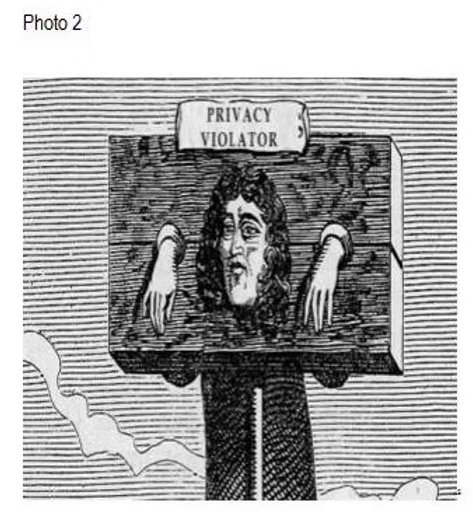
Courts & Justice in Tudor England
The common law legal landscape in 16th century England was a patchwork of courts and traditions where participants received different treatment based on their social status, location and even the year. The courts were not unified into a single, hierarchical system, and were often sorted by types of crimes, with each court developing its own unique expertise or specialty.

Mindum Shoe Horns
This shoe, or shooing, horn, was crafted by Robert Mindum in 1613. It is a carved piece of ox horn, engraved with variety of floral and geometric stylized motifs.

Our Mummified Cat
While touring Agecroft Hall, many guests are immediately drawn to one of our more noteworthy exhibits—the mummified cat in the wall.
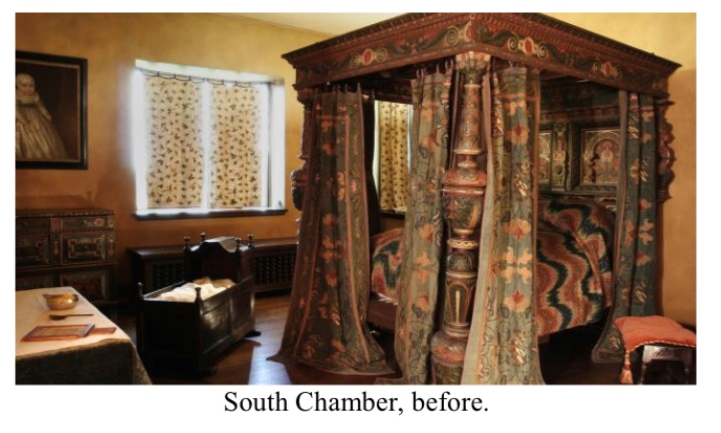
A Fresh Face for Agecroft Rooms
We’ve been freshening up our bedchambers here at Agecroft Hall. In an attempt to bring more historical accuracy to our tour, we decided to paint the South Chamber and the Tapestry Chamber, the two bedchambers on exhibit.

Portrait of James VI and I, King of Scotland and England
For a small historic house museum, Agecroft Hall has a fairly extensive collection of Tudor-Stuart portraits.
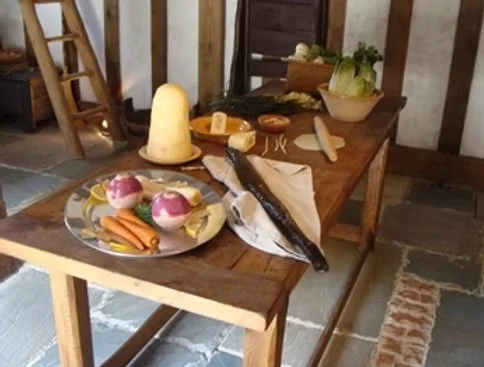
Food during the Lenten season in 17th Century England
A Christian holy time, the Lenten season begins on Ash Wednesday and lasts approximately 40 days, ending on Maundy Thursday, the Thursday before Easter. During Lent, many Christians fast and give up certain luxuries to replicate Jesus’s sacrifices, although the way different denominations both observe and calculate Lent varies.
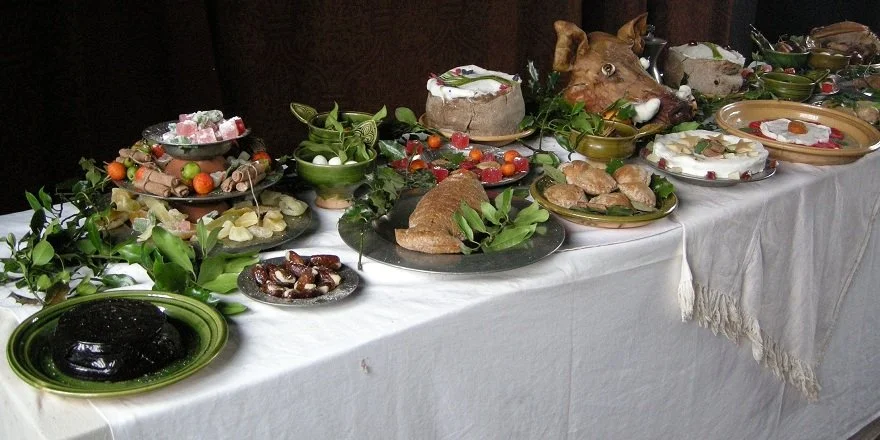
Tudor & Stuart Christmas
The Christmas of the late 16th and early 17th centuries in England is somewhat similar to Christmas of the early 21st century.

Three Images of King Charles I
Agecroft Hall is lucky to have three images of Charles I, King of England, Scotland and Ireland from 1825 until his execution in 1649 for high treason after losing the English civil war in 1648.

"The Wolf Hunt:" a Mortlake Tapestry
In our collection at Agecroft Hall, we have about ten tapestries. Tapestries were very expensive and indicated that the owner was a wealthy person.

The Coifs of Agecroft Hall
In our collection here at Agecroft Hall, we have three coifs.

English Spot Sampler, c. 1625-1650
Stitched on expensive, imported linen with multi-colored silk threads, this spot sampler is emblematic of those produced in the second quarter of the 17th century.
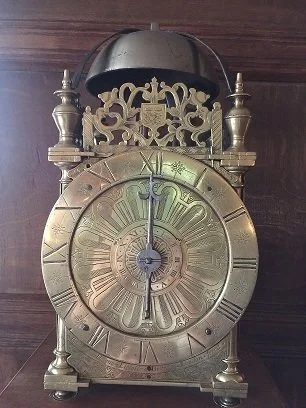
A Tale of Two Clocks
Lucky us! We are fortunate enough to have two examples of an English lantern clock in our collection and on display in our museum.
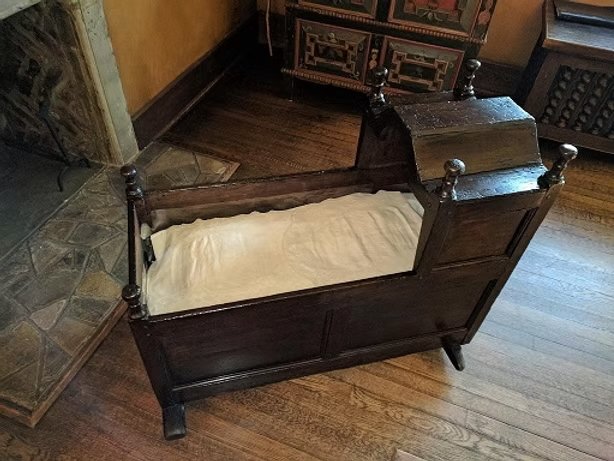
Childhood in Elizabethan and Stuart England
The lives of children in Stuart England were much different, in some ways unfathomably different, than the lives of children today.
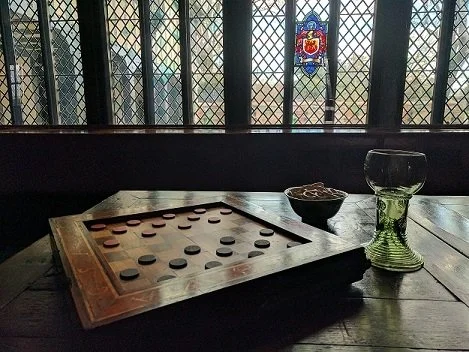
Gaming and Game Boards
Our collection here at Agecroft houses some impressive examples of board games spanning the centuries from the mid-1500s to the early 1900s.