
Categories

WWII Christmas Recipes
Christmas 1941 was the first Christmas holiday celebrated under the year-old food and supply rationing program in the U.S.

Wartime Decorations
During the years of WWII, food and supply shortages required rationing and sacrifice of some comforts at home.
Tudor Desserts
The dessert course of Tudor meal was called the “banqueting course” at the meal’s end and consisted of a table full of sweet and elaborate confections.

Playing Cards
Playing cards was a normal part of upper society diversion in Tudor England. Families and their guest would often retire to the withdrawing room, or parlor, to play and listen to music, and play charades, dice games, and board and card games.

Paper Dolls
Paper dolls in various forms appeared in Japan as early as A.D. 900 and were used in purification ceremonies. In France in the mid 1700’s, “patins”, or “Dancing Jack” puppets were popular.

WWII Victory Mail
With a massive quantity of mail going back and forth between families and troops during WWII, Army post offices, fleet post offices and US post offices flooded with mail.

Radio During WWII
The cheapest form of entertainment in the 1940’s, and the most popular during WWII, was radio. It was widely available and accessible both in the U.S. and abroad.
Math in the 17th Century
Boys and girls who were educated in the 16th and especially the 17th century would have learned how to do math.

Apple Stamping
You will need to use a knife for this craft. Make sure young children are supervised!

Armor
At Agecroft Hall, we have a few sets of armor. In the Long Gallery Leading into the house and in the Gentlemen’s Study, we have armor from the time period.

A Very Brief Compilation of Census Data Relating to Agecroft Hall
The United States conducts a census survey every 10 years. The most recent one—as you probably know, was taken earlier this year in 2020.
Apotropaic Mark
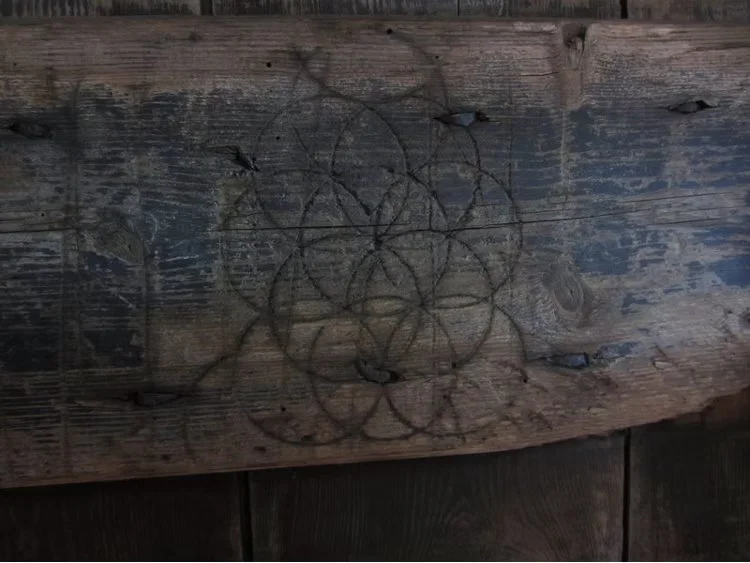
Dr. Ian Tyers, a dedrochronologist from England, was here in 2016, inspecting and dating our wood panel paintings. While looking at our large panel portrait of George Poulet (1593), located in our Great Parlor, Dr. Tyers found something very neat! If you stand facing the fireplace and look at the fifth square up from the floor on the left-hand side of the fireplace, you will see a lightly inscribed daisy wheel (above), an apotropaic mark.
Michaelmas
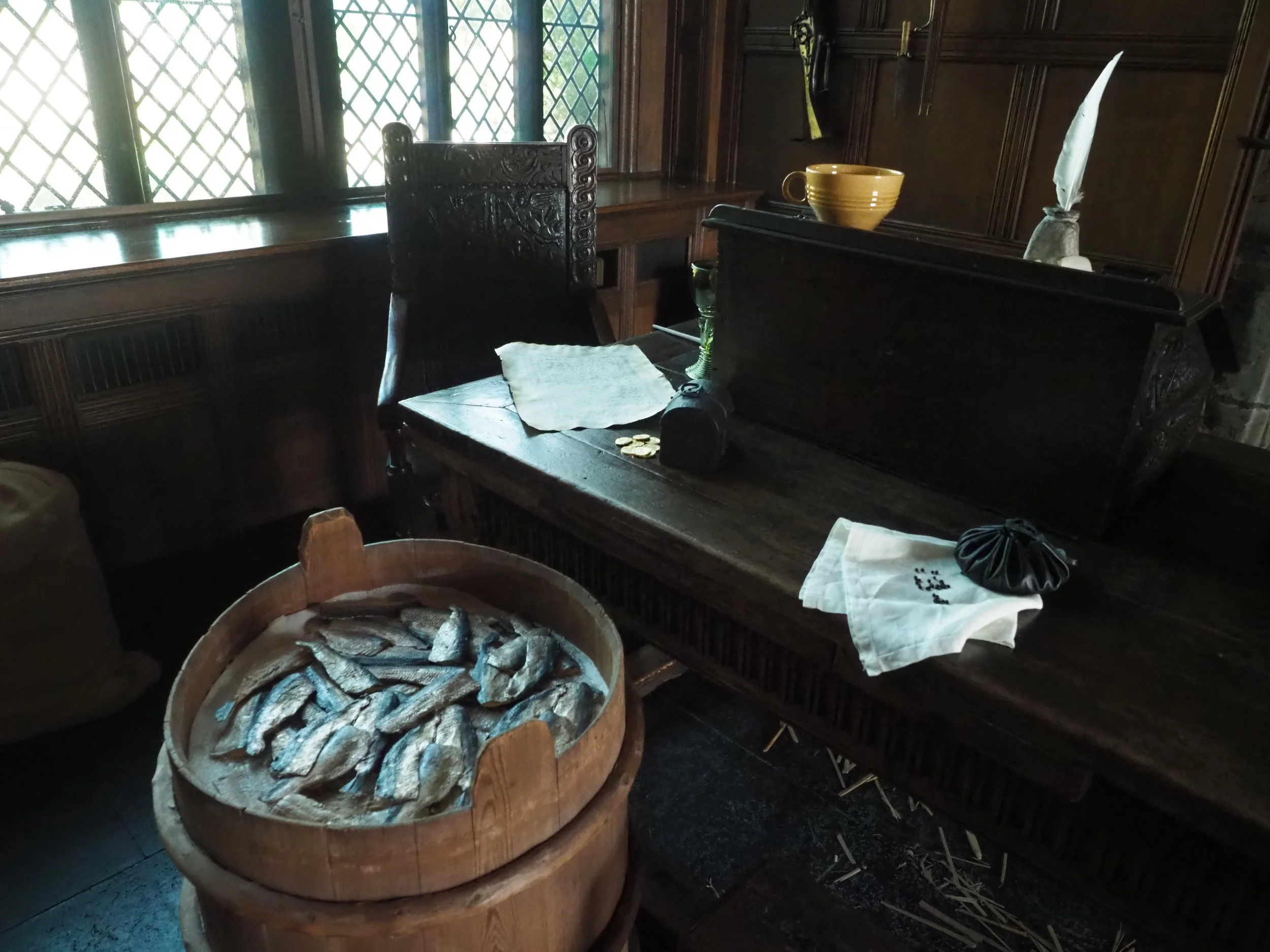
During the 16th and 17th century, Michaelmas (pronounced mich-al-mis) was an important day, not only in the liturgical calendar, but also as an English quarter day—one of four days in the year when financial matters were traditionally settled.

A Portrait of a Unknown Gentleman by Adrian Thomas Key
Agecroft’s halls are filled with portraits, and they are some of the objects that prompt the most questions from visitors. This blog offers a wonderful opportunity to highlight a portrait this is not currently on view.
Who are the John Tradescants?
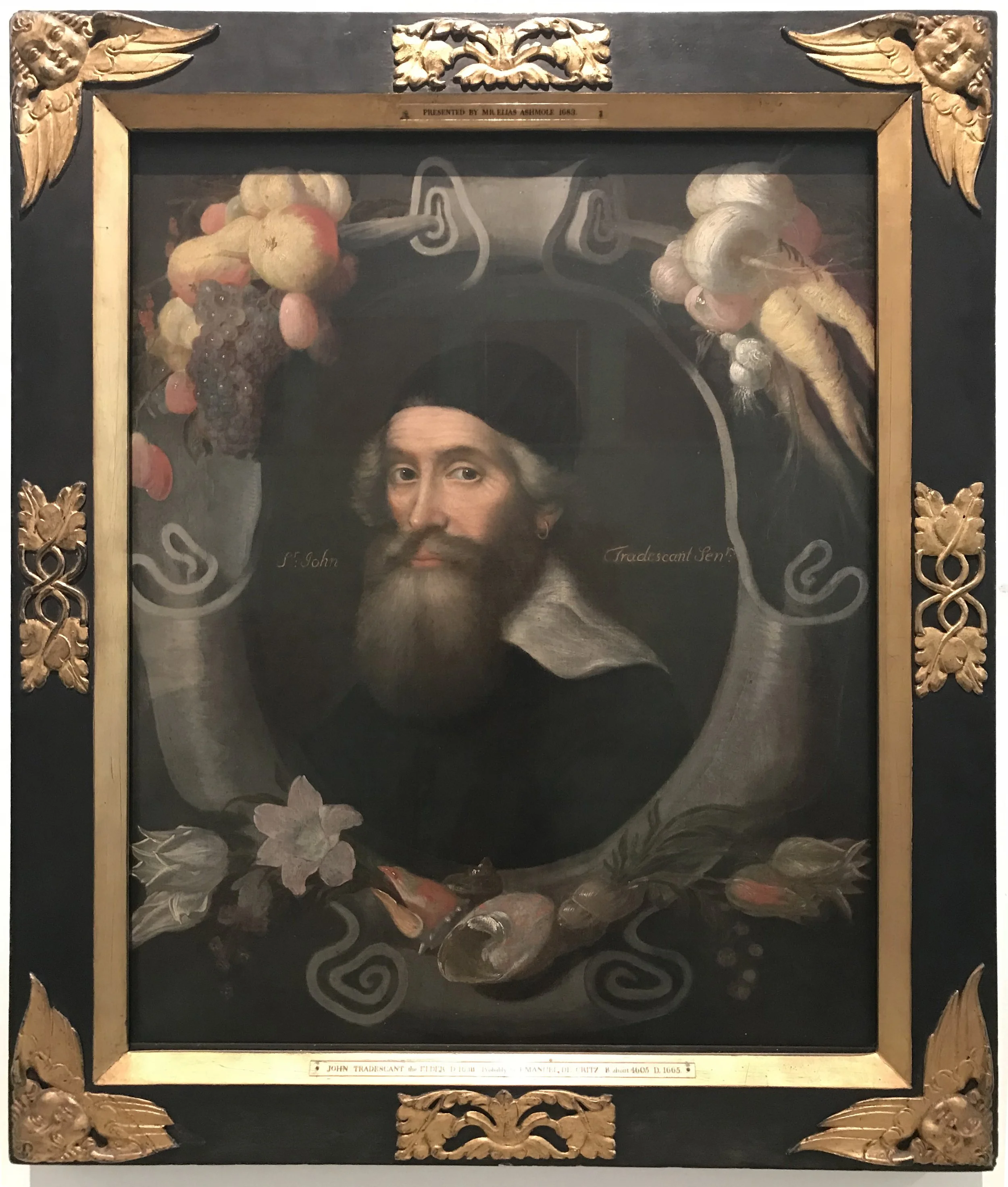
At the far end of our gardens, past the formal Sunken Garden, sits the Tradescant Garden. Here, our horticulturalists have planted a variety of plant life, using garden inventories of the John Tradescants as a guide when choosing the plant material.

Gentleman’s Study—Curiosity Cabinets
To understand the phenomenon of Curiosity Cabinets, we must first understand the mindset of European society in the early to mid-17th century. It was the tail end of the Italian Renaissance, and the height of the Elizabethan era.

Quarantine during the 1600s in England
It is said that history repeats itself, and those who do not learn from it are the ones doomed to repeat it. Well, as 2020 has proven, we are all seemingly repeating history with a plague outbreak.

Changing Times and English Calendars
I began researching this post with great intentions of writing up a piece about Lady Day and its importance as an English quarter day.
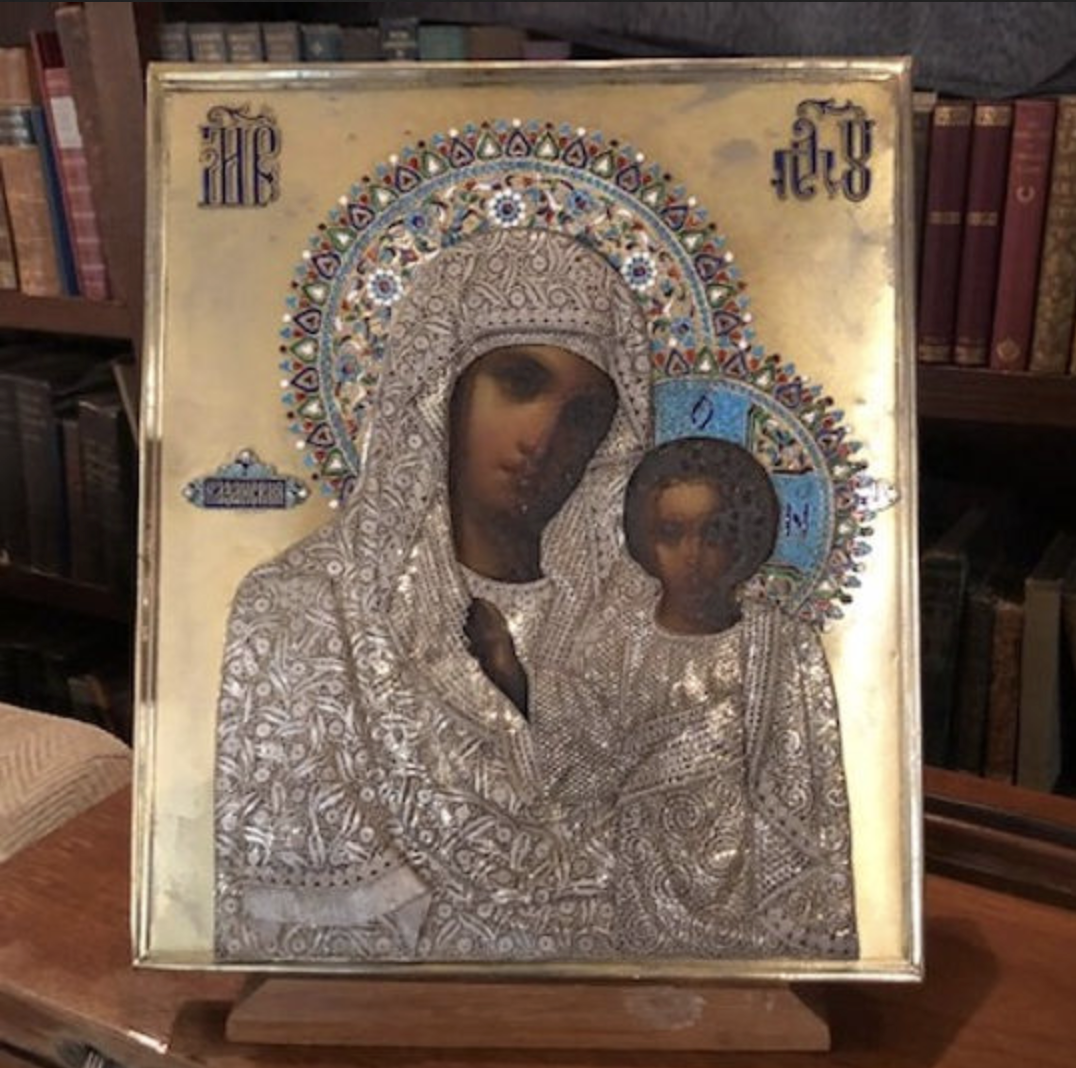
Icon, Kazan Mother of God
As anyone who has visited Agecroft Hall & Gardens knows, most of what is exhibited portrays life in Tudor and Stuart England.

Clavicytherium
In the centuries before television and the internet offered endless options for amusement, music was the primary form of family entertainment.